Herzog Gives Eisenkot the Mandate: His Bloc Has 48 of 120 Seats, Netanyahu’s Has 53
Neither bloc has a majority, and the Arab parties with 19 seats are key. Netanyahu remains caretaker prime minister.
Jerusalem – Israeli President Isaac Herzog announced on Saturday night that opposition candidate Gadi Eisenkot gets the first chance to form a government. The decision came after the October 27 election, in which neither bloc won a majority, a day earlier than the announcement expected on Sunday.
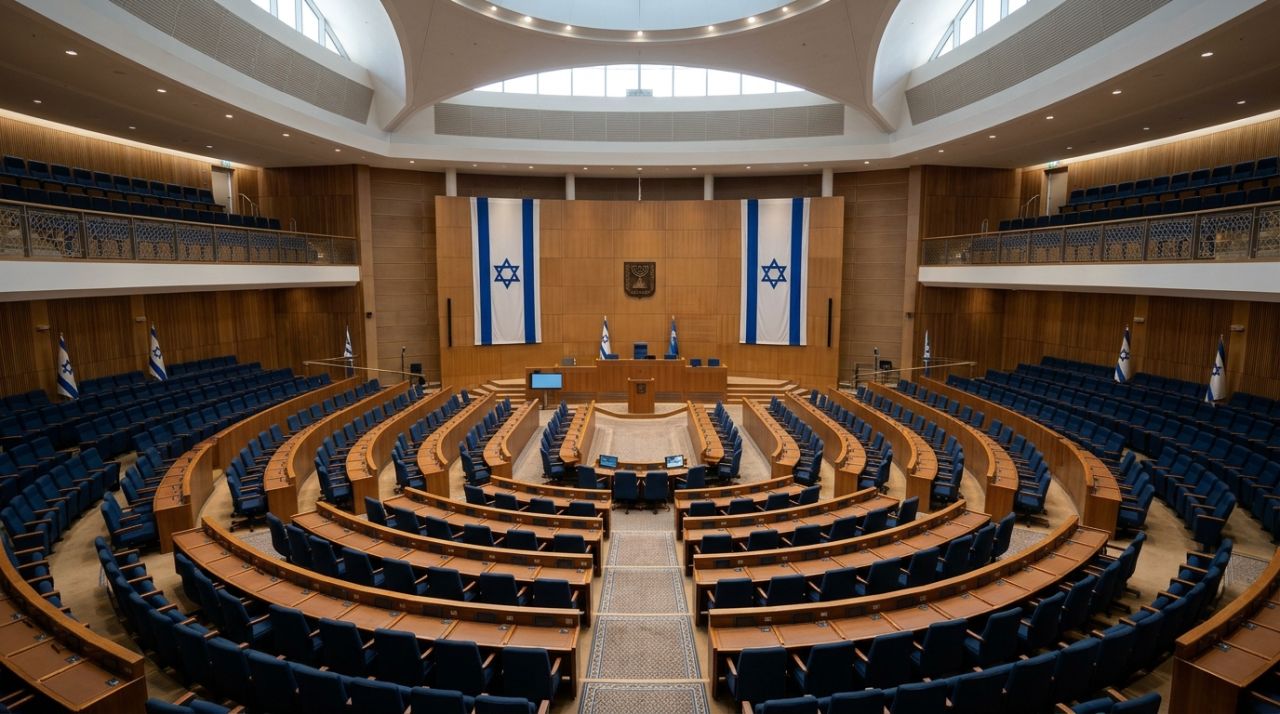
The numbers are clear, and the majority is missing. In the 120-seat Knesset, Eisenkot’s four-party bloc has 48 seats, Netanyahu’s bloc 53, and the Arab-majority parties a record 19. A majority is 61. By the editorial calculation, Eisenkot with the Arab parties would have 67 seats, while Netanyahu, with 53, is far from 61.

Representatives of most of the main parties recommended Eisenkot to the president in marathon talks. The two largest Arab parties said they would help his bloc oust Netanyahu, while most Jewish opposition parties vowed not to rely on their support.
“Now is the time to form a national emergency government,” Eisenkot wrote on X. Netanyahu, who remains caretaker prime minister, called for a “national unity government” and warned against “hastily swearing in a government with terrorist supporters”. He also claimed, without evidence, that some Arab countries interfered in the election. The acting director of the Central Elections Committee, Din Livne, replied in a letter that there is “no basis” for such claims.
Eisenkot said he would work with the Arab parties only if they meet conditions, including calling Hamas a terrorist organisation that must be destroyed. His party Yashar urged Likud to distance itself from “radical parties”, by which it means Netanyahu’s settler-linked allies and the ultra-Orthodox parties.
What is not clear: the source we checked does not state an exact deadline for forming a government. If a coalition cannot be agreed, the country goes to new elections, and Netanyahu remains caretaker prime minister. Once the new Knesset is sworn in, Eisenkot’s bloc with the Arab parties would have a parliamentary majority and could pass laws even without a formed government.
The mandate does not guarantee the premiership. It is only the first test for a coalition that, according to the numbers, is possible but politically the hardest.
MKNews Hub · Macedonia · November 9, 2026
