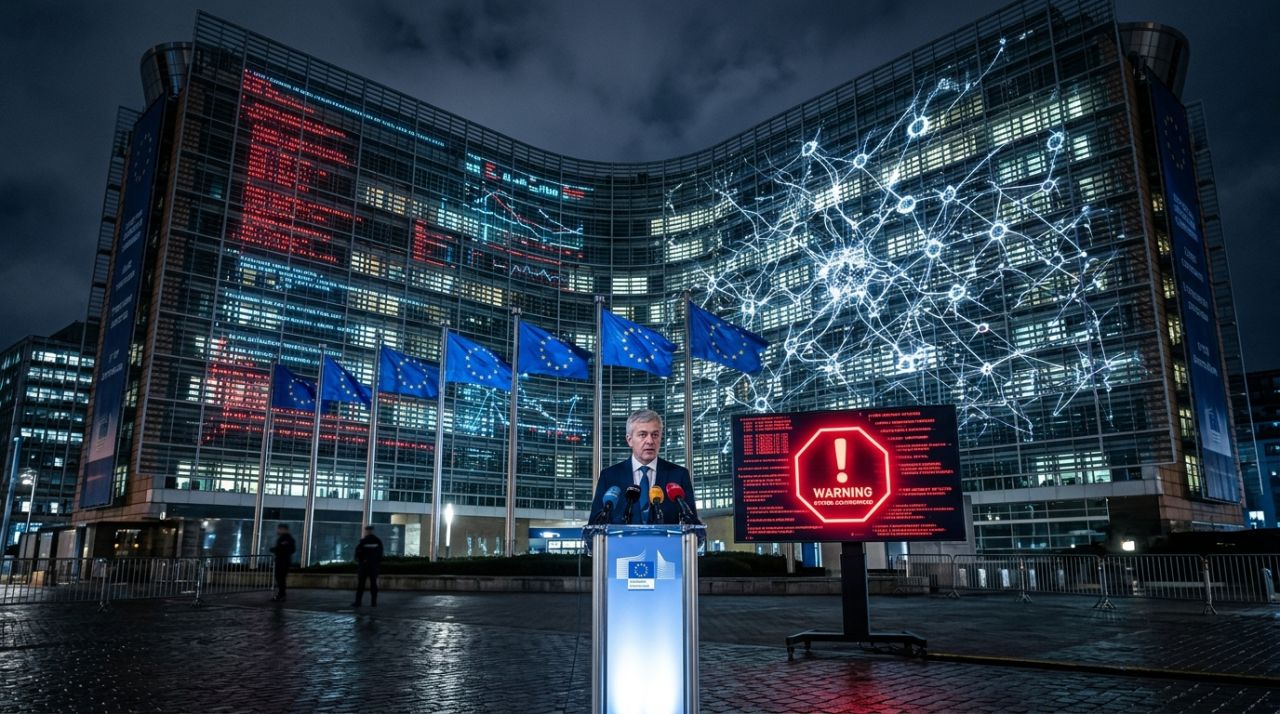
Illustration: AI-generated
Hackers Using an Artificial Intelligence Tool Attacked European Commission Systems, the Disruption Has Lasted More Than 10 Days
Systems for staff pay, leave and health insurance were hit. The Commission says there is no evidence of a data leak affecting all staff.

Brussels – A cyberattack has disrupted the European Commission’s internal systems for more than 10 days. According to CERT-EU, the cybersecurity body for EU institutions, the hackers used ARTEX, a publicly available artificial intelligence tool that finds weaknesses in IT systems.
The attack was first detected on October 22, and an initial investigation confirmed it on October 26, after which a full investigation began and preventive measures were taken.

Hit were Sysper, the human resources platform staff use for pay, leave and working time, and MyPMO, the medical expense reimbursement system. Translation services were also disrupted on November 17, and Sysper briefly went down again on November 18.
“We have not detected any evidence of a data breach affecting Commission staff as a whole,” spokesperson Thomas Regnier said. He declined to say whether the attack is still ongoing or who is behind it.
According to an EU official, the Commission believes it has contained most of the attack, but the full extent of the damage is still unclear. No ransom demand has been received.
The attack was also discussed by the College of Commissioners on November 18, where Commissioner Henna Virkkunen briefed colleagues. The Commission’s highest internal crisis body held an emergency session as early as the start of November.
This is the third major cyber incident at the Commission this year. In January the system for official mobile devices was attacked, and in March the infrastructure hosting the Europa.eu websites was compromised, with about 91.7 gigabytes of data stolen.
MEP Bart Groothuis criticised the Commission for keeping information about the incident internal instead of informing the public.
The attack comes as European governments warn of rising hybrid threats from Russia, which Moscow denies. No one has been officially blamed for the attack.
It has not been announced whether staff personal data, such as names, addresses or salaries, has been stolen.
MKNews Hub · Macedonia · November 20, 2026
This story was prepared with the help of artificial intelligence and reviewed by the editor.
🇲🇰 Прочитај на македонски Хакери со алатка со вештачка интелигенција ги нападнаа системите на Европската комисија, нарушувањата траат повеќе од 10 дена