Mickoski cites “over 4 to 1” in Brvenica: the numbers confirm the ratio with SDSM, but not a majority
The ratio of 2,943 to 706 is indeed 4.17 to 1, but it compares the winner with the fourth-placed candidate, not the runoff rival.
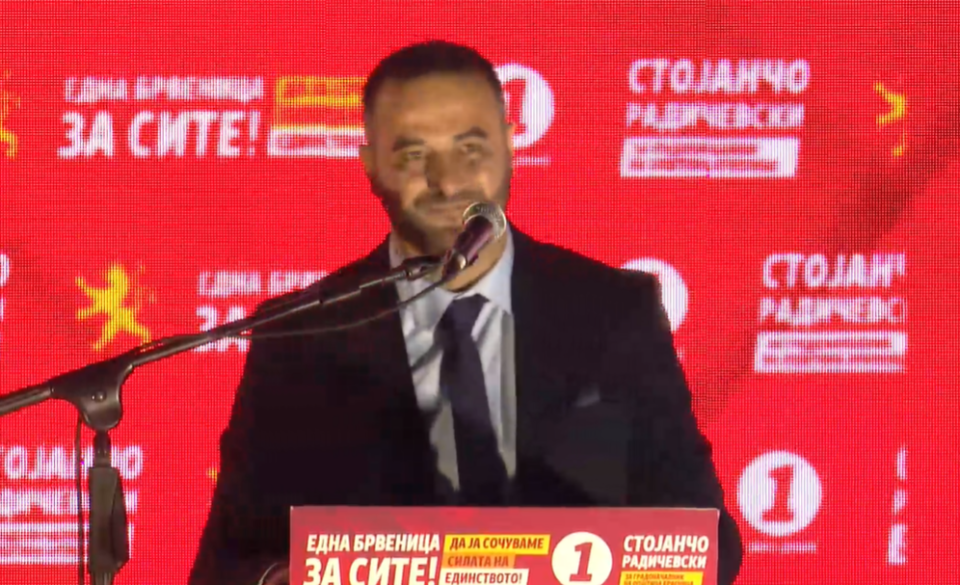
After the first round of the Brvenica election, Prime Minister Hristijan Mickoski said the gap between VMRO-DPMNE and SDSM is “over 4 to 1”. The statement became the party's main message after the vote and is repeated in headlines. It is therefore useful to check what exactly that figure measures and what it does not.
According to published results, VMRO-DPMNE candidate Stojanche Radichevski won 2,943 votes, and the candidate of SDSM and its coalition won 706. Dividing 2,943 by 706 gives 4.17. So mathematically the statement is correct: Radichevski has more than four times as many votes as the SDSM candidate. There is no dispute about that.
But this comparison is only one of the possible ones. The SDSM candidate finished fourth, with 9.33 percent of the vote. If the same Radichevski is compared with the runner-up, the NAI candidate with 2,152 votes, the ratio is about 1.4 to 1. That is a significant lead, but it is not “4 to 1”. It is that candidate, not SDSM, who is the runoff rival, if it is confirmed that the top two advance.
More important still, the statement says nothing about a majority. The votes of all other candidates add up to 4,462, while Radichevski has 2,943. Of all votes cast for candidates, that is about 39.7 percent. In other words, for every vote for Radichevski there are about 1.5 votes for some other candidate. This does not mean all of those votes will go to one place, but it explains why a runoff is needed.
That is why “convincing victory” and “over 4 to 1” are political assessments, not election outcomes. Each party reads the result through the yardstick that suits it: the governing party compares with SDSM, which is the easiest comparison to win, while other participants may compare their positions with previous elections, with the number of voters or with their place in the runoff. Neither yardstick is false, but neither tells the whole result.
On this occasion it seems wrong either to attribute motives to the statement or to declare it mistaken. After elections, parties always stress the most favorable comparison. The job of the media is to add the remaining data to that number so that readers can judge for themselves.
What is not known? It is unknown how the 2,234 voters who backed VLEN and SDSM in the first round will vote. Those votes are more than twice the 791-vote gap between the top two. It is also unknown how many of the more than 8,600 voters who stayed home will change their minds on November 1.
What does it mean? The “4 to 1” ratio is accurate, but it does not settle the election. On November 1 the candidates will be compared with each other, not with SDSM. The runoff starts from zero in terms of mobilization, and the first-round result is an advantage, not a guarantee.
MKNews Hub · Macedonia · October 19, 2026
