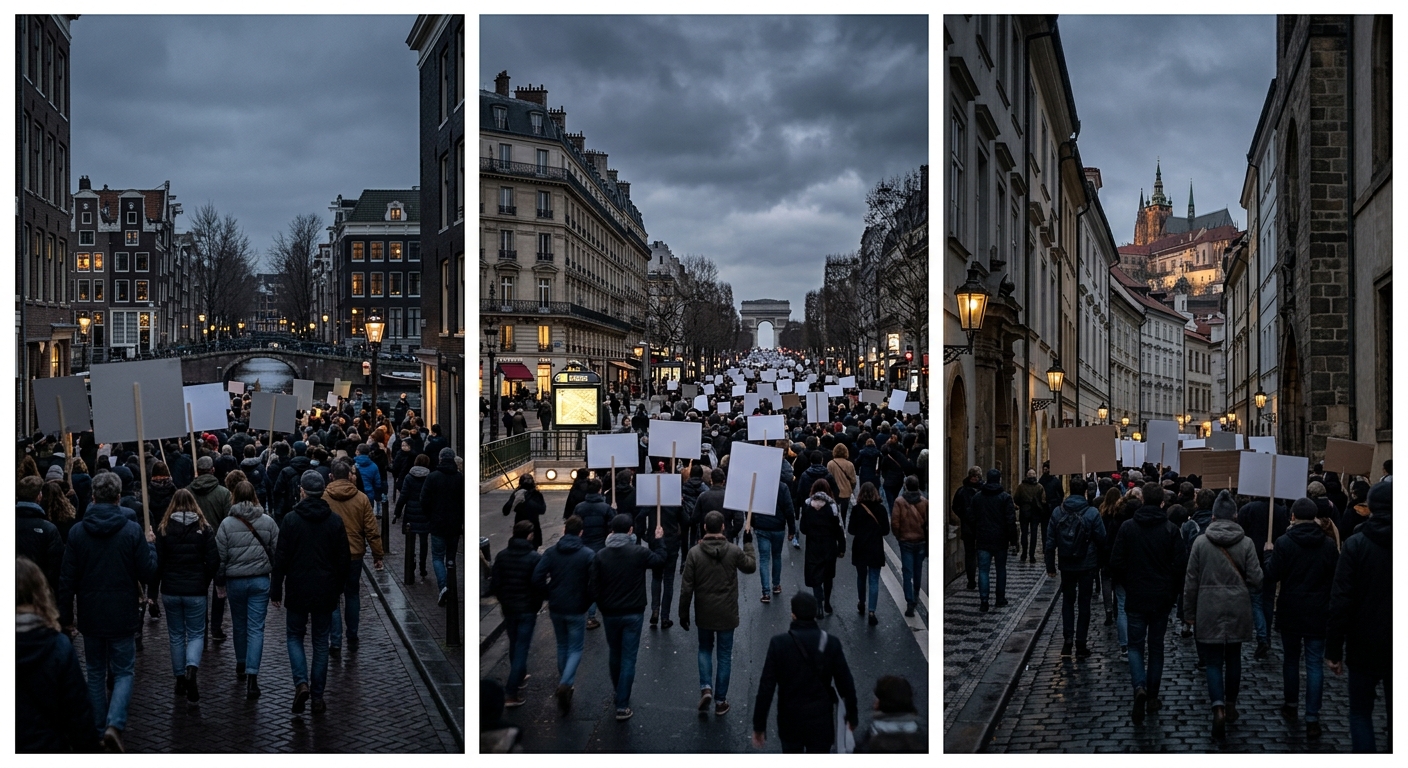
From Tirana to Paris: protests in three countries in one week, with different causes and the same violence problem
Albania, France and Italy have protests at the same time, but the causes, demands and government responses differ.
In a single week, mass protests took place in Albania, France and Italy, and in some cities they turned into clashes with police. It is easy to conclude that this is one European wave of anger. But the facts we have show different stories with a few common points.
Albania. The unrest in Tirana began on October 13 over conditions at universities and high tuition fees, after months of protests against the government. Demonstrators demand the resignation of Prime Minister Edi Rama. Since Tuesday, 272 people have been injured, including 169 police officers, according to Al Jazeera. Rama claims “foreign hands” are behind the unrest, without offering evidence.

France. On Saturday, October 17, about 550,000 people took to the streets by the authorities' count, and 800,000 according to organizers. Reports link the demonstrations to rising living costs and to students. Arson and looting followed: at least 1,800 arrests, more than 500 injured members of the services, a city hall set on fire in Limoges. Macron blamed “insurrectionist elements” from radical far-left groups for the violence.
Italy. Protests in Italian cities, including Milan and Bologna, were part of the same period. Because their causes and scale are not the same as the Albanian or French ones, it would be wrong to treat them as the same story.
What do they have in common? First, young people and students play a significant role and are most often present in the streets. Second, economic themes lie at the base of the discontent: tuition fees, living costs, prospects. Third, in all cases violence by groups acting within the protests blurred the message and gave the authorities a reason to move the conversation from demands to order.
What differs? The Albanian protests demand the departure of the prime minister, which is a direct political demand. The French ones are tied to living costs and take place ahead of presidential elections in spring, so every side uses them for its own ends. The authorities' responses differ, but with a common pattern: Rama speaks of foreign hands, Macron of radical groups, and Trump, in the French case, of immigration, although French authorities have not drawn such a link.
There is also a methodological note here. When a government explains a crisis by an outside or marginal factor, that can be true, but it can also be a way to avoid a discussion of the causes. Every such statement should therefore be read as the assessment of the person giving it until evidence appears.
What is not known? It is unknown whether new waves of protest will come, or whether any of these movements will take an organized political form. We also do not know how much of the violence was planned and how much spontaneous.
What does it mean? The lesson for Europe is not that anger is the same everywhere, but that countries with different systems share a similar problem: how to tell peaceful protest from violence, and how for authorities to listen without defending themselves with accusations. That difference will determine the outcome in all three countries.
MKNews Hub · Macedonia · October 19, 2026
