Parliament extends the oil crisis state to April 20, 2027 with 70 votes
The crisis state has been extended for the third time, and Mickoski says supply is secured through the end of the year.
Parliament has extended the crisis state for oil and oil derivatives until April 20, 2027. According to reports, 70 MPs voted in favor, with no votes against and no abstentions. The state was due to expire on October 21.
This is the third extension. The crisis state was introduced after events in the Middle East blocked the international supply of oil and oil derivatives, and it had earlier been extended to July 21 and then to October 20. On October 10 Prime Minister Hristijan Mickoski announced it would be extended for another six months, adding that he hopes for de-escalation so the state could be lifted earlier.

What does the crisis state allow? According to available reports, it allows the government to coordinate management of the situation and to apply measures to ensure a secure energy supply. The reports do not list the individual powers, so the public does not have a full picture of what changes in practice.
In parallel, the government is extending tax measures. VAT on diesel has been cut from 18 to 10 percent, and excise duties on petrol and diesel have also been reduced. Finance Minister Gordana Dimitrieska-Kochoska said the VAT measure was extended to October 20, and on October 19 the government announced a further extension. The deadline for the new measure is not given in available reports.
The cost of the measures also shows up in the budget. On October 7 the government adopted a rebalance with revenues of 374.2 billion denars and expenditures of 420.5 billion denars, with a deficit of 4.1 percent of GDP. From the opposition SDSM, leader Venko Filipče said the rebalance is the result of poor economic management rather than the reduced fuel levies, and claims fuel prices rose by more than 50 percent despite the measures. That is his assessment, not a calculation verified here.
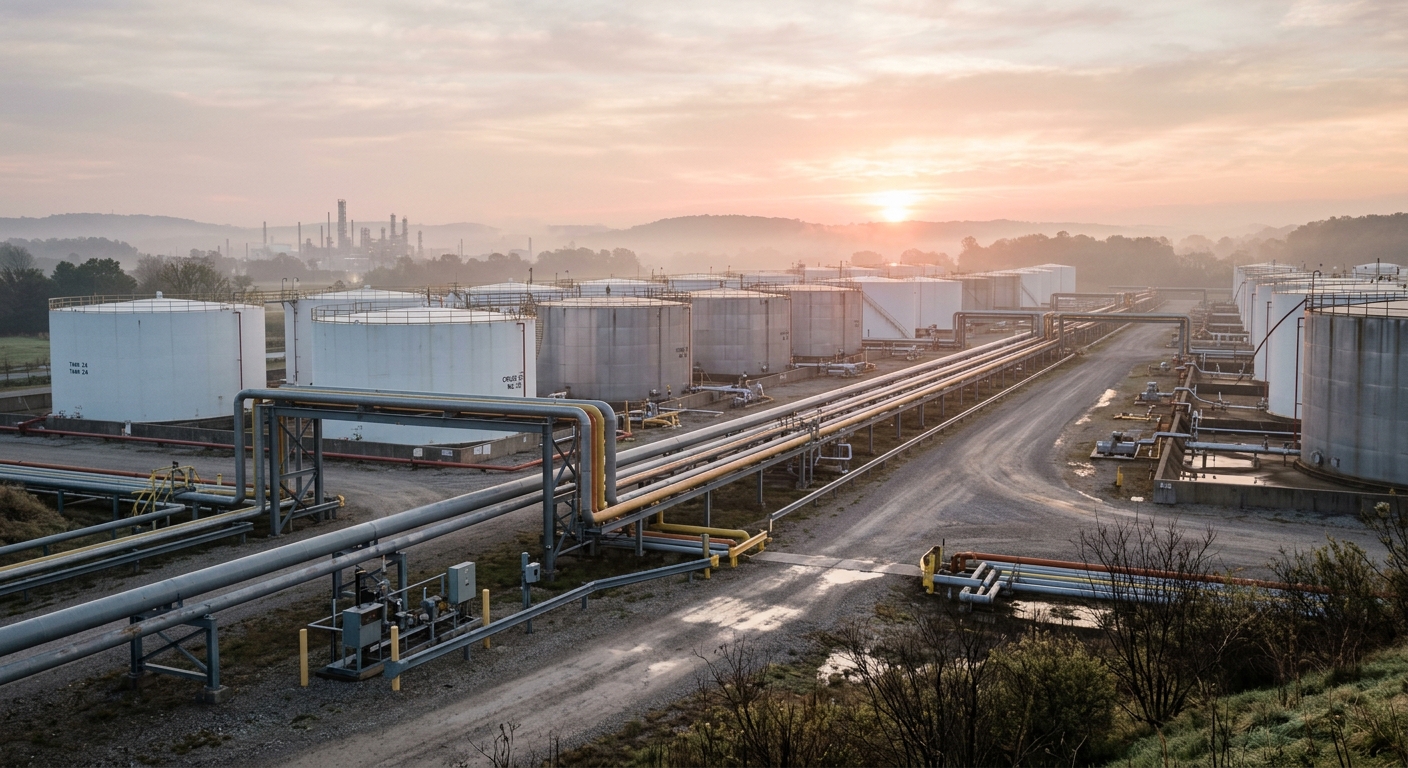
Mickoski said the country is “absolutely secured” with all types of fuel until the end of the year, that he expects no serious turbulence next year either, although challenges remain, and that the pipeline from the port of Thessaloniki to the OKTA refinery is full. He described the situation as “the largest energy crisis”. He also dismissed rumors of an end-of-year equalization of electricity prices, calling them speculation.
The global context is not calming. Oil reached 104 dollars a barrel on October 9, and on October 19 Brent traded around 108 dollars, after Friday's close at its highest level since mid-May. That means the cause of the crisis state, the disruption of supply through Hormuz, has not yet been removed.
What is not known? The exact list of powers that follow from the crisis state is not known, nor how much extending the tax measures will cost the budget through April. It is also unclear whether there will be another extension on April 20, since that depends on the situation in Hormuz.
What does it mean? The state puts the end of the measures in the spring, but only if the world market calms. Until then the price of fuel remains a product of world quotations and of government decisions on VAT and excise.
MKNews Hub · Macedonia · October 20, 2026
