Rama draws a “red line” on unrest in Albania as the European Commission condemns the violence
The prime minister says he is open to dialogue “with anyone except the rioters”, while students say they will continue until Rama resigns.
Albanian Prime Minister Edi Rama said on October 19 that “this red line will be drawn firmly at this critical stage of our democratic development”. He added that the rioters “must and will bear the legal and financial consequences” of their behavior. The statement follows several days of unrest in Tirana that began on October 13.
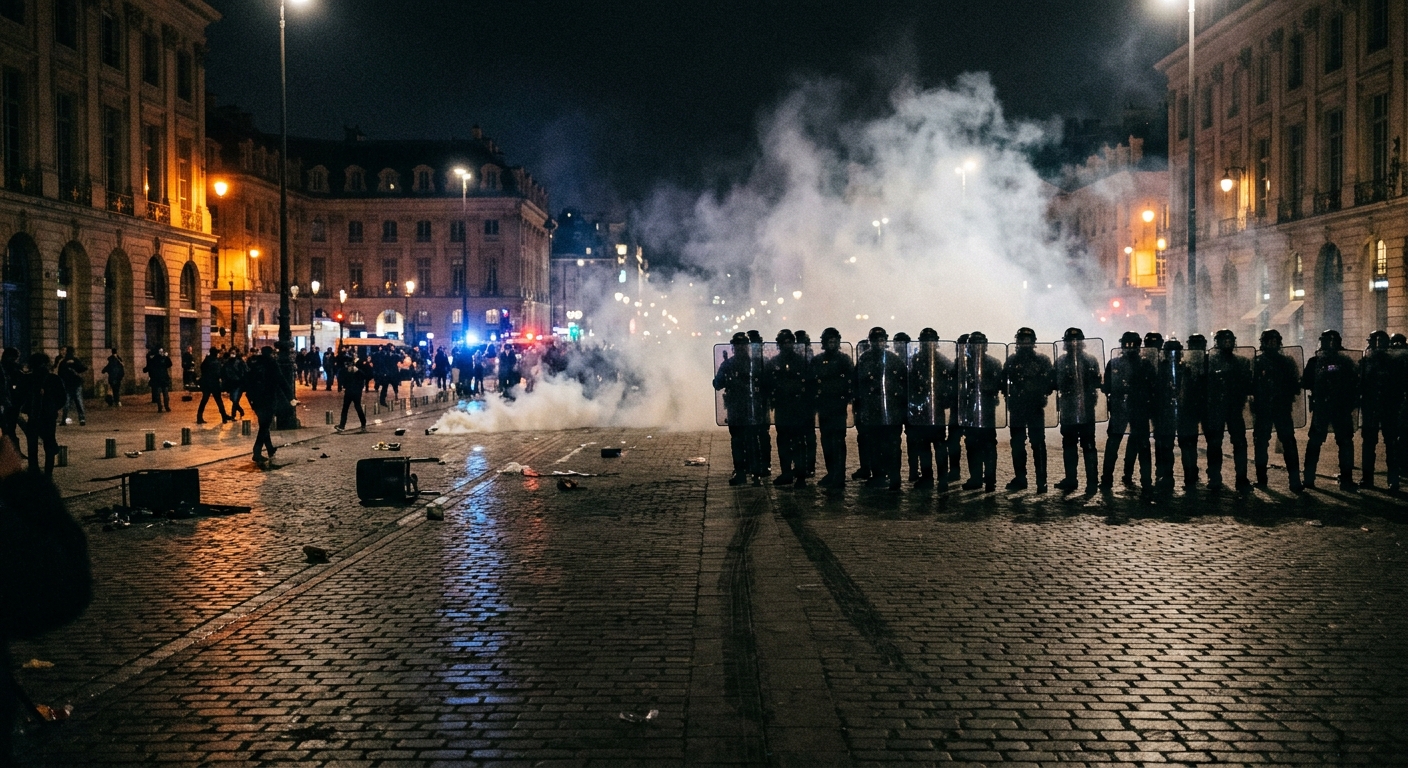
According to Euronews, demonstrators set buildings alight, threw Molotov cocktails and fired fireworks at police, and police used rubber bullets, water cannons and tear gas. Reports cite hundreds of injured, including police officers, but give no exact figure for the latest days. On October 18 Al Jazeera reported 272 injured since Tuesday, 169 of them police, and on October 16 Interior Minister Ervin Demo said 156 people had been injured by then, 97 of them police.

Rama said he is ready for dialogue “with anyone except the rioters and the political parties that do not distance themselves from violence”. He urged protesters to distance themselves from the rioters and earlier blamed foreign influence for the unrest, without offering evidence for those claims. They remain his assessments, not established facts.
On the other side, the student movement is not backing down. Student Leka Sina, 22, said: “We will continue our movement until Rama resigns.” The protests, which the media call “Flamingo”, have run for months and demand the prime minister's resignation. A student movement against high tuition fees stepped up demonstrations in early October.
The new element is the reaction of the European Commission. On October 18 the Commission condemned the violence, saying it has no place in a democratic society and that the response must stay within the law and be proportionate. It said freedom of assembly and expression are fundamental rights and core European values, and that grievances should be addressed through constructive dialogue and peacefully, reminding that Albania is an EU candidate country. That differs from what the initial reports carried, in which no reaction from the Union was noted.
The Commission's position carries two messages. The first is for demonstrators: violence weakens the demand. The second is for the authorities: use of force must be proportionate. Two police officers have already been suspended after excessive force was recorded in two cases, according to earlier reports, which shows that this issue is also open.
What is not known? The exact number of injured and arrested in the latest days is unknown, as is whether any opposition party has officially taken over the protests. It is also unknown whether talks between the government and students will take place, since both sides set conditions: Rama excludes rioters, while students demand his resignation.
What does it mean? The crisis is entering a phase in which each side defines its own limit: the prime minister through the “red line”, students through the resignation demand, and the EU through a reminder of rights and proportionality. For the region, and for North Macedonia as a neighbor, the question is whether talks will come before the number of injured grows.
MKNews Hub · Macedonia · October 20, 2026
