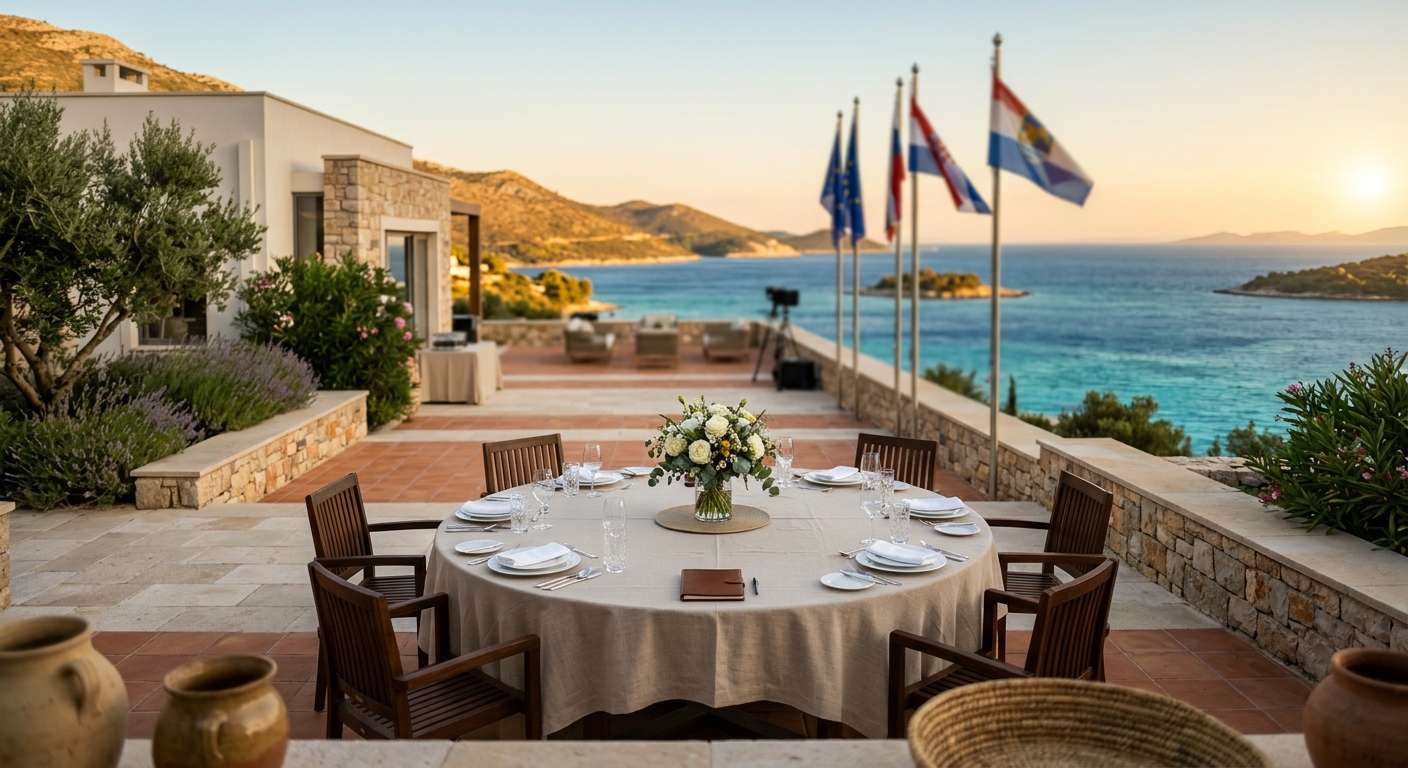
Berlin Process in Miločer on October 22: Mickoski, Merz and Kos at the leaders' summit
The summit in Montenegro covers regional cooperation, connectivity and European integration, and no concrete decisions for Skopje have been announced.
On October 22 Montenegro hosts the Berlin Process Leaders' Summit in Miločer, near Budva. According to announcements, the summit will be attended by German Chancellor Friedrich Merz, Prime Ministers Hristijan Mickoski (North Macedonia), Edi Rama (Albania), Albin Kurti (Kosovo) and Andrej Plenković (Croatia), and Enlargement Commissioner Marta Kos. Heads of the EBRD, the World Bank, the European Investment Bank and the Regional Cooperation Council are also expected, according to the Montenegrin government's list of participants.
The Berlin Process is a regional cooperation initiative for the Western Balkans led by a rotating host country. Montenegro holds the chairmanship in 2026. The summit topics are listed as regional cooperation, connectivity and the European integration of the Western Balkan countries. The Montenegrin government's page does not describe the priorities and deliverables in detail, so I cannot confirm a concrete signing agenda.

What usually comes out of such a summit? At the previous summit, in 2024, the Common Regional Market Action Plan and the Agreement on Higher Education were signed, which shows that results are usually regional agreements, not decisions on EU accession. This year's documents are not yet public, so it is unknown what will be signed.
For North Macedonia the summit is an occasion to meet leaders, including the German chancellor, and the heads of financial institutions that already finance Macedonian projects. Such meetings matter for arranging financing of connectivity projects, but in themselves they do not change the status of EU talks. North Macedonia is still waiting for the last step to open the first cluster, as Commission President Ursula von der Leyen said on October 2.
On the same day Kos is expected to discuss Montenegro's progress and the reforms required, and to meet Kurti about recent developments in Kosovo. That shows the summit also has a bilateral dimension beyond joint statements.
What is not known? It is not known whether Mickoski will hold separate bilateral meetings or which documents will be signed. It is also unclear whether there will be a message on Macedonian-Bulgarian relations, although that question is on the regional agenda. How many of the announced pledges will get deadlines and money will be seen only after the summit.
What does it mean? The summit is a high-protocol regional forum whose value is measured by concrete agreements and financing, not by group photographs. The public will be best able to judge it by what ends up in the signed documents on connectivity and the common market.
MKNews Hub · Macedonia · October 21, 2026
