Brent at $108: US eases sanctions on Russian diesel while Hormuz flows remain reduced
Oil fell 1.6 percent after Trump's move, but analysts say it does little to change the physical disruption in Hormuz.
The price of Brent crude on October 19 fell by 1.72 dollars, or 1.6 percent, to 108.14 dollars a barrel, after Friday's close at its highest level since May 19, roughly a five-month high. US crude WTI traded at 100.54 dollars, down 87 cents, after ending last week at its highest since September 17.
The fall followed a decision by US President Donald Trump, who on Friday signed an executive order waiving some sanctions and tariffs tied to Russian exports. The move follows a deal between Trump and Vladimir Putin to export Russian diesel to the US and other countries. Shipments are expected to start at about 2.3 million barrels this month and rise to about 7.6 million barrels a month. Secretary of State Marco Rubio said the president will take up to 60 days to assess the impact on the global economy.

The choice of diesel is not accidental. It is the fuel where markets, and Macedonian prices in the latest RKE calculation, have been rising: reference prices for diesel rose by an average of 2.9 percent while those for petrol fell. Additional diesel supply from Russia, if it really arrives at the planned volume, could in theory ease that pressure. How and when that would be felt at pumps here has not been established.
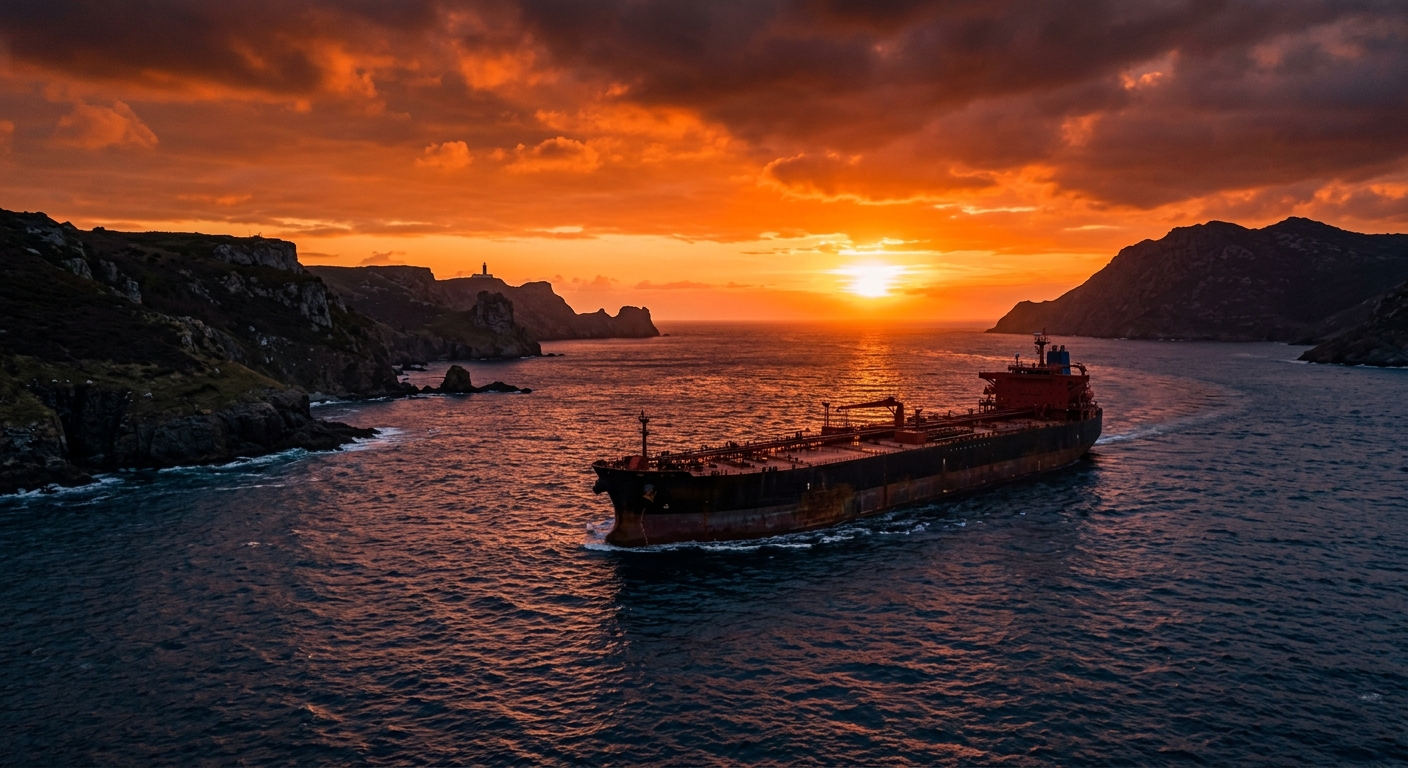
The other half of the story is Hormuz. According to Kpler data, the flow of crude from the Gulf fell to a seven-day average of about 8.5 million barrels a day last week, from more than 20 million the week before. Kpler recorded at least 10 confirmed incidents involving commercial vessels. Iran's Revolutionary Guards said that on Sunday an oil tanker caught fire and exploded after hitting a naval mine in the southern part of the strait.
Analysts reacted differently. Giovanni Staunovo of UBS said that “flows remaining below pre-conflict levels continue to provide support” to prices. Priyanka Sachdeva of Phillip Nova called Trump's move “another desperate attempt to keep prices in check ahead of the US midterm elections”, adding that it does little to change the physical disruptions in Hormuz. Bjarne Schieldrop of SEB believes Iran could step up attacks before the November 3 elections.
These are analysts' assessments, not facts, and should be read as such. The facts are that Brent is around 108 dollars, that it is at its highest since mid-May, and that flows through Hormuz are significantly reduced compared with the previous week.
For small markets like Macedonia's, the effect is indirect: the country imports derivatives, and the price of diesel and petrol in the RKE calculation depends on world quotations and the exchange rate. The crisis state, extended to April 20, 2027, and the reduced VAT on diesel are the measures with which the state cushions that link.
What is not known? It is not known whether the US order will improve diesel supply and how quickly, or how other OPEC members or US allies will react. It is also unclear whether Iran will really step up attacks before November 3, since that is an analyst's estimate.
What does it mean? Oil remains hostage to two factors outside consumers' control: political decisions in Washington and security in Hormuz. While Brent stays around 100 dollars, pressure on fuel, here as well, does not let up.
MKNews Hub · Macedonia · October 20, 2026
