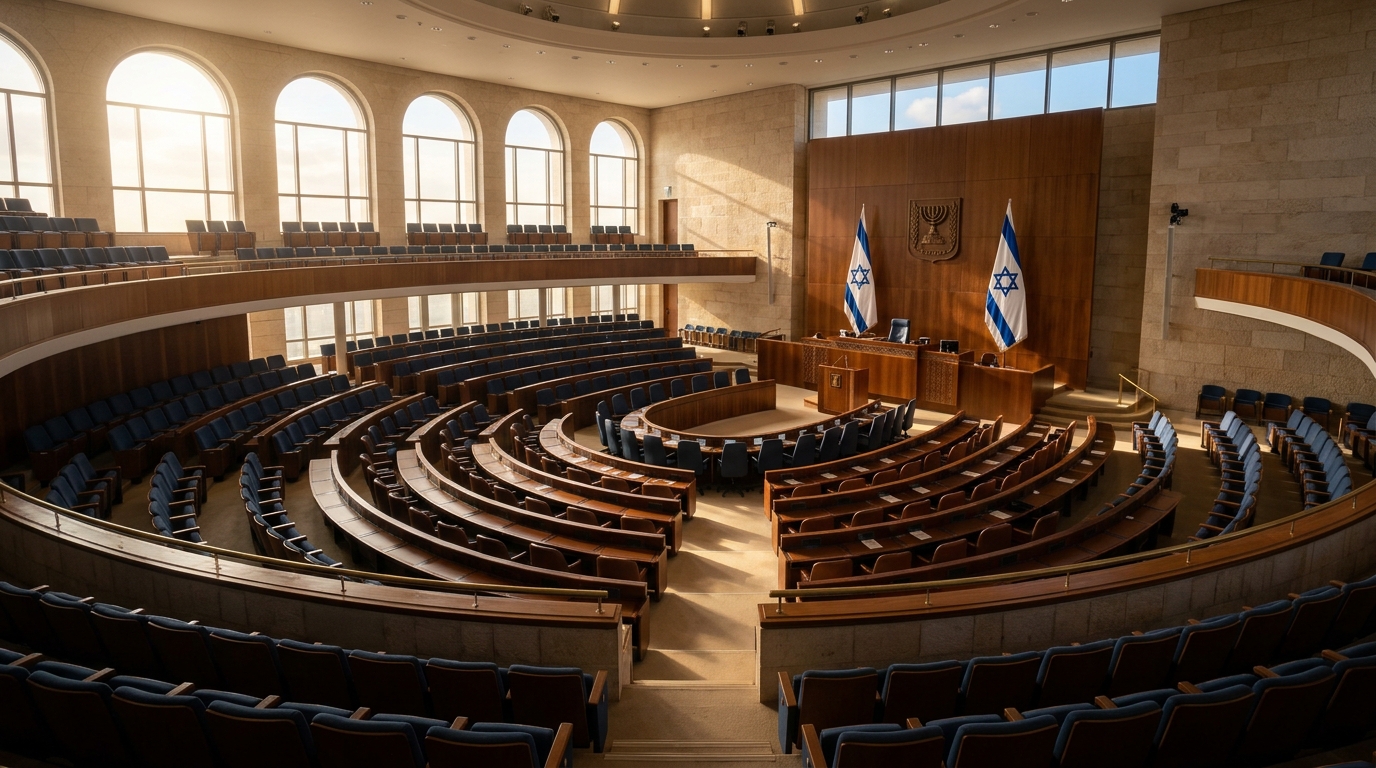
Israel’s Election Ended Without a Majority: Netanyahu’s Bloc Has 53 Seats, the Opposition 48 and Arab Parties 19, With 61 Needed
Neither bloc has a majority and the Arab parties are decisive. Netanyahu claims there was fraud, while the election commission says there is no basis.
Israel’s parliamentary election on October 27 ended without a winner. According to the official results of the Central Elections Committee, released on October 29, Prime Minister Benjamin Netanyahu’s bloc has 53 of the 120 seats in the Knesset, the opposition bloc led by Gadi Eisenkot 48, and the Arab parties 19. A majority needs 61. The largest party is Likud. This is the situation as of November 1, from the latest sources we checked.
The arithmetic. Netanyahu is 8 seats short and the opposition 13. According to projections carried by ABC News, the Joint List has 12 seats and Ra’am 7. The opposition with the Joint List would have 60, one short of a majority (our calculation), so it needs both Arab lists, together 67. Netanyahu, on 53 seats, would get a majority with Arab parties, but he rules that out.
The fraud claim. Netanyahu alleged fraud or interference in the election without explaining his claims, and in his post-election speech said a government with Arab parties would “endanger Israel”. The acting director general of the Central Elections Committee, Dean Livne, said there is “no basis for allegations of election theft”. The opposition rejected the claims and said the election was free and fair. Police said they would investigate any credible allegation. According to JNS, the elections chief ordered a Shin Bet investigation into suspected foreign interference, reportedly concerning Qatar. That is a single source and is not confirmed by others.
The positions of the two blocs. Eisenkot has set coalition terms and says lawmakers who accept his principles can be partners. The Joint List said it is ready for political cooperation to end Netanyahu’s rule, and the Ra’am leader, Mansour Abbas, said he had been in contact with both blocs. President Isaac Herzog urged leaders to approach the talks “with an open mind”.
What comes next. Analysts, as reported, say the opposition lacks a clear path to power and that a national-unity deal, defections or a new election are possible. On November 1 about 2,000 demonstrators marched to Rabin Square in Tel Aviv demanding a Jewish-Arab government, according to the Times of Israel.
What is unclear. We did not find reliable data on turnout or exact seat numbers per party. The deadline by which the president must give someone the mandate has not been published, and different sources give different dates for the vote, October 27 or 28, so we use October 27, according to JNS.
What to follow. Whom Herzog entrusts with the mandate to form a government, whether there are talks with the Arab parties and whether evidence of the alleged interference appears.
MKNews Hub · Macedonia · November 3, 2026
