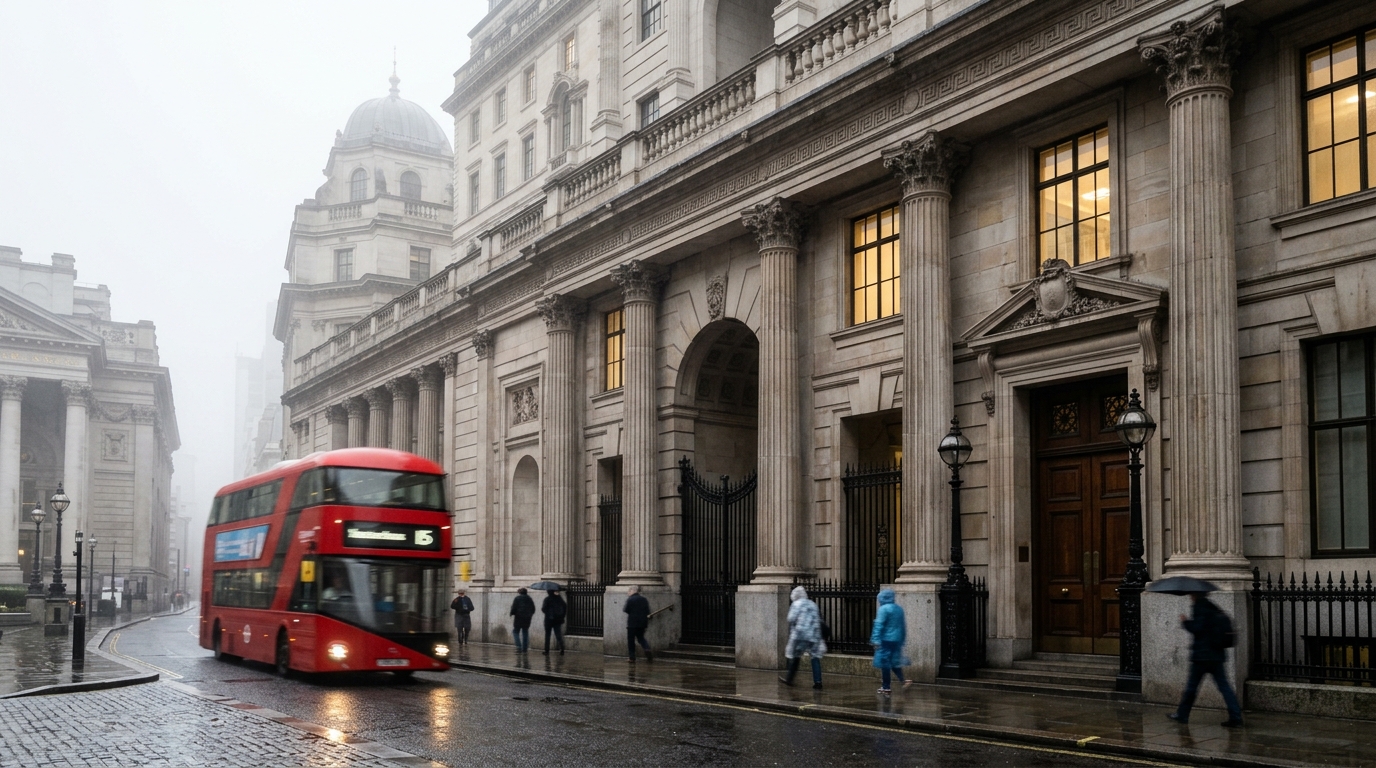
Bank of England Raises Rate to 4 Percent, First Increase Since 2023, Citing Costlier Energy
The November 5 decision comes after the hold in September. Inflation is expected to reach about 5 percent by mid-2027.
London – For almost three years the Bank of England only held or cut rates. On November 5 that ended: the base rate was raised by a quarter of a percentage point, from 3.75 to 4 percent, for the first time since August 2023. In September the rate was held at 3.75 percent, with three members voting for an increase.
This time the vote was more decided. Eight members of the Monetary Policy Committee backed a rise of 0.25 points and one wanted a rise of 0.5 points.
The reason is inflation, which reached 3.5 percent in September, up from 3.1 percent in August, the highest in 11 months and well above the 2 percent target. The bank expects inflation to approach 5 percent by mid-2027, mainly because of costlier energy from the war with Iran and disruption in the Strait of Hormuz. In September it expected about 3.75 percent in the final quarter and slightly above 4 percent in the first quarter of 2027.
The growth forecast was raised to 1.6 percent this year and 1.3 percent in 2027, from 1.1 percent for both years in July. The decision, then, is not a response to recession, but to prices.
Governor Andrew Bailey said the increase “shouldn’t be seen as the first in an inevitable long sequence of hikes”. But he added that unless the conflict in the Middle East is resolved, it does not seem likely to be the last increase either.
For households, Moneyfacts calculations show that a 0.25-point rise means about 37 pounds more a month on a 250,000-pound tracker mortgage over 25 years. The average new mortgage rate is 5.89 percent. Fixed-rate loans are affected only when the deals end, and many lenders had already priced in the change. Savers can expect higher rates, but with a delay.
The market reacted calmly, because the decision was expected. The FTSE 100 rose about 0.6 percent and government bond yields rose slightly. Deutsche Bank expects one more rise to 4.25 percent, in December or February, but not a long cycle. Oxford Economics forecasts 4.25 percent in February 2027. The next decisions are on December 17 and February 4.
At 4 percent, the United Kingdom is at a higher level than the euro area, where the ECB deposit rate is 2.5 percent, a gap of 1.5 percentage points. Euro area inflation of 4 percent is, in turn, higher than the British 3.5 percent.
The denar is practically pegged to the euro, so the London decision has no direct effect on the exchange rate or on the National Bank, which on November 3 kept its key rate at 4.25 percent. But it fits the picture from the euro area: central banks treat costlier energy as a risk to prices, not as a short episode.
MKNews Hub · Macedonia · November 6, 2026
