Kos: Montenegro could sign its accession treaty by summer 2027, Merz says negotiations are almost complete
Croatia still has six demands, while North Macedonia is still waiting for the first cluster to open.
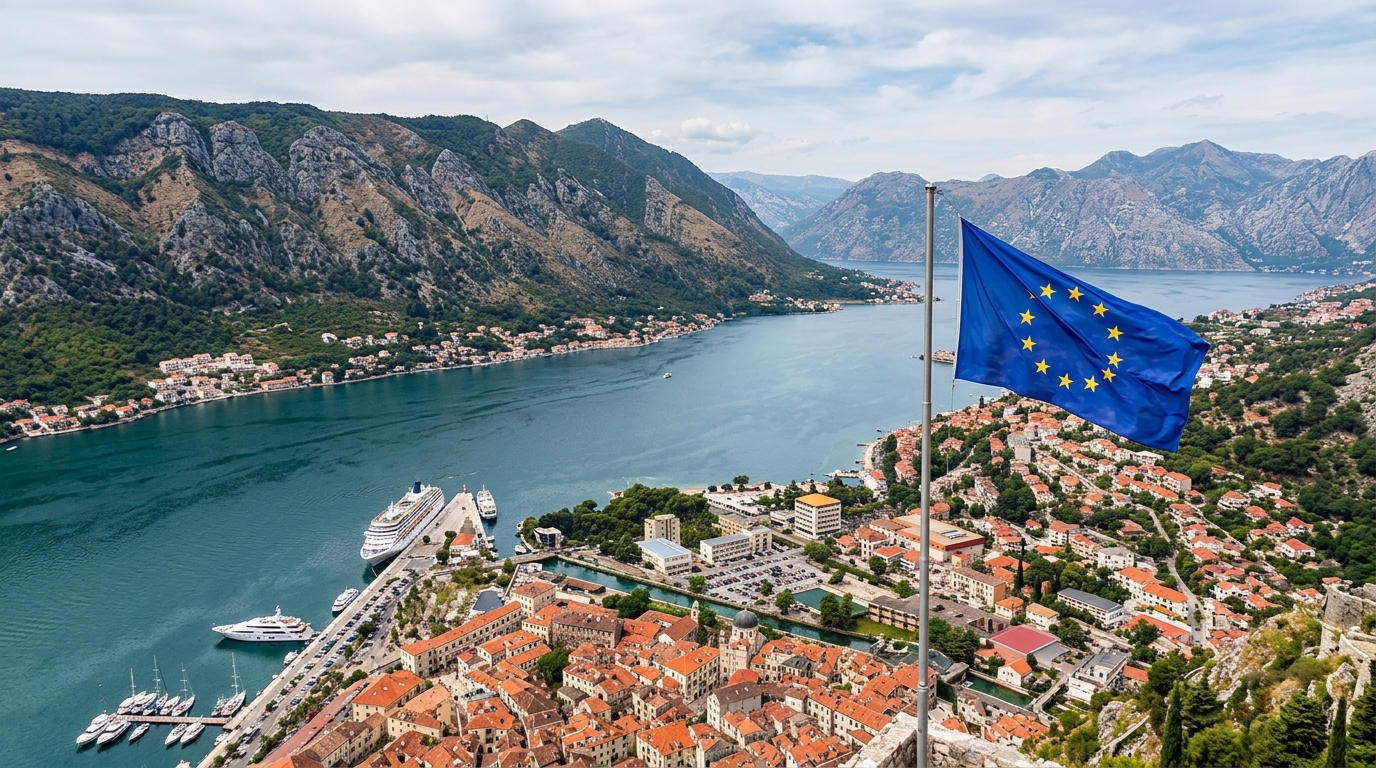
Enlargement Commissioner Marta Kos said on October 21, during a visit to Podgorica, that Montenegro could realistically sign its accession treaty by summer 2027 if it completes the necessary reforms and resolves its disputes with Croatia. Brussels, she said, supports Montenegro's ambition to become the EU's 28th member in 2028.
German Chancellor Friedrich Merz said on October 22, at the Berlin Process summit in Budva, that Montenegro has made significant progress, that membership is a realistic goal and that the country has “almost completed” the negotiations. He added that enlargement should be merit-based, and that reforms and political will must come from the region.

Merz also said violence must not be an option during protests, in the EU or elsewhere, that unresolved issues from the past and polarization hold the region back, that war criminals must not be glorified and that dialogue between Pristina and Belgrade should be normalized. He also pledged continued German support for the Berlin Process. In the European Western Balkans report of these remarks, no signed agreements are listed.
What is the problem? Montenegro, according to Kos, has completed almost all the technical work, but needs the green light from every member state. Croatia's demands are not formally part of the negotiations, but they must be resolved because progress requires the agreement of all 27 states. Croatia had eight demands, six of which remain: compensation for the Morinj detainees, the search for 14 missing Croatian citizens, war crimes prosecution, property rights of Croatian families, demarcation of the maritime border and ownership of the training ship “Jadran”.
Montenegro has already made moves: a swimming pool in Kotor, previously named after Zoran Gopčević, has been renamed after Petar II Petrović Njegoš, and the government retroactively approved the memorial plaque at the former military facility in Morinj, allowing it to stay. That shows such disputes are resolved through concrete, often symbolic concessions.
How does this look from the Macedonian perspective? North Macedonia has been a candidate since 2005 and, according to Mickoski's statements, has not yet opened the first cluster (on fundamentals). Albania, for its part, closed its fourth of 33 chapters on October 14. The three countries are at different points, for different reasons: for Montenegro it is the last political agreement of the member states, for Albania the reform pace, and for North Macedonia a political-constitutional question with Bulgaria.
What is not known? It is not known whether Croatia will accept the solutions for the remaining six demands, or how much time Montenegro will need. It is also not known how many chapters are closed, since the report does not say. It is unclear whether the 2028 target will survive ratification in all member states.
What does it mean? Montenegro's example shows that the last steps to membership are political, not only technical: one neighbor can halt the process. That is a lesson for the region, and for us, that bilateral questions do not disappear when chapters are closed.
MKNews Hub · Macedonia · October 23, 2026
