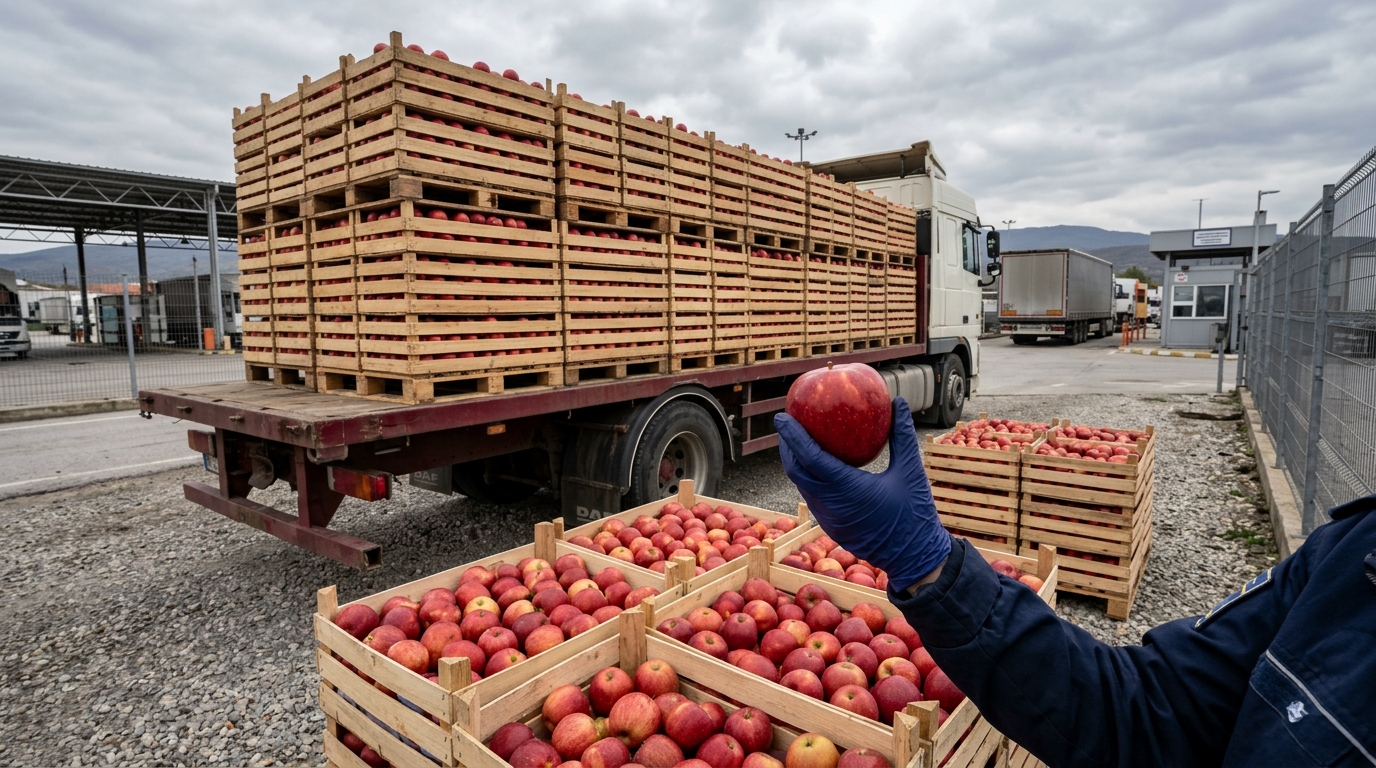
Bulgaria Returned Two Shipments of Macedonian Apples Totalling Over 40 Tonnes Over Pesticides, and the Laboratory Findings Are Not Published
The Bulgarian Food Safety Agency reported a shipment of 21,089 kilograms, and according to Macedonian reports a second one of 19,350 kilograms followed on November 3.
The Bulgarian Food Safety Agency (BABH) reported that a shipment of apples from Macedonia of 21,089 kilograms was stopped at the border, in which laboratory tests found a pesticide banned in the European Union. According to reports, the shipment is being returned to Macedonia and does not enter the EU market. According to Macedonian media, a second shipment of 19,350 kilograms followed on November 3.
The total. The two shipments together are 40,439 kilograms, or about 40 tonnes (our calculation). However, we cite the second shipment according to the brief and Macedonian reports, because the Bulgarian text we read mentions only the first. We cannot rule out that this is the same case reported with different data.
What has not been published. The report does not name the pesticide, the measured value or the permitted level. The first news says only “banned in the EU”, and the brief says “above the maximum permitted limits”. Those two descriptions are not the same: one is a prohibited substance, the other an exceeded permitted level. Until the laboratory findings are published we cannot say which is true. The producer or exporter is not known either.
An earlier case. The same report also mentions an earlier return of more than 11 tonnes of Macedonian peppers, in which laboratory tests found pesticide residues above the permitted level. Three cases in a short time are a pattern the Bulgarian side is following, but not proof that the problem is systemic. BABH states that increased checks on fresh fruit and vegetables will continue.
Tighter controls or a product problem. The two explanations do not exclude each other. Bulgaria announces stepped-up inspections, which means more shipments are tested and more findings come to light. On the other hand, a finding of a banned pesticide, if confirmed, is the producer’s problem, not the control’s. Those are two different things, and news often mixes them.
What it means for exporters. Apples are an important agricultural product, and Bulgaria is a neighbouring market with a short route. Every return means transport costs and the loss of the shipment, but also a reputational risk for Macedonian products among EU buyers. How large a share of Macedonian apple exports goes to Bulgaria, we did not find and we do not guess.
The reaction in Macedonia. We found no public reaction from the Food and Veterinary Agency or the Ministry of Agriculture. That reaction is exactly what is most missing: whether the shipments were tested before export, by whom and with what result.
What to follow. The publication of laboratory findings and names of the substances, a statement by Macedonian control authorities and whether there will be new returns. For producers the practical question is who bears the cost when a shipment is returned and how it is proven that other shipments are clean.
MKNews Hub · Macedonia · November 4, 2026
