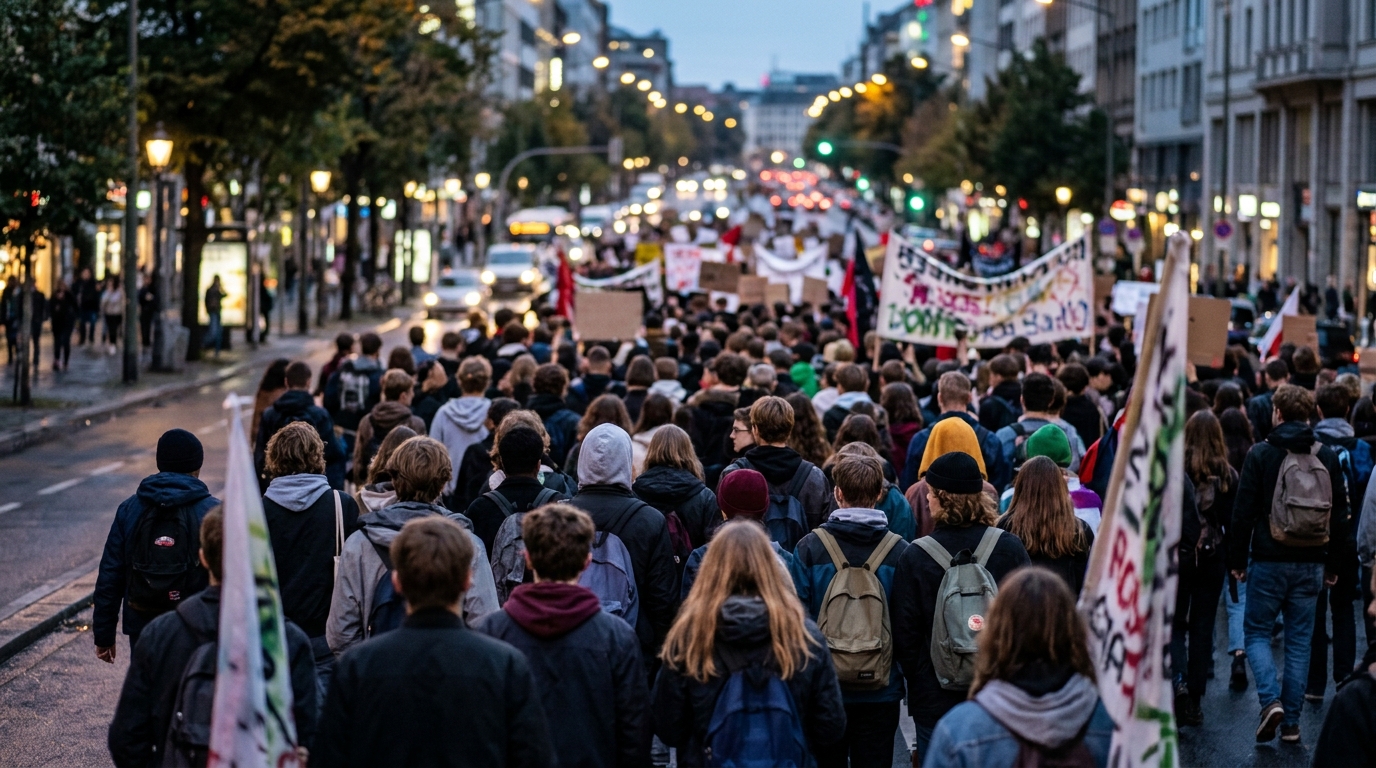
Student protests in the region: tenth day in a row in Tirana, thousands of students and teachers on the streets in Greece
Albanian students demand lower tuition fees and Rama's resignation, while Greek protesters demand housing and more money for education.
In Albania, October 23 was the tenth consecutive day of student demonstrations in Tirana, according to Euronews. On the same day in Parliament, opposition and governing MPs scuffled after the Assembly leadership rejected the opposition's demands to debate the protests. Opposition MPs held up photos of students injured by police and blocked the podium, while the Assembly continued voting on legislation.
The students demand lower tuition fees, more state investment in education and an end to corruption in the education system. Over time they have joined a broader anti-government movement calling for Prime Minister Edi Rama's resignation. According to the same report, protesters have clashed with police repeatedly over the last two weeks, throwing rocks, flares, firebombs and fireworks, while police responded with batons, water cannons and tear gas. The report gives no figures for injured or detained people.

Rama vowed to resist. After meeting teachers and school representatives, he said an attempt to overthrow the government through violence “will never be allowed to happen, in any form or for any reason”, and that legitimate grievances, in his view, are being exploited by people deliberately inciting violence.
In Greece on October 21, thousands of students and teachers marched through Athens, with similar protests in Thessaloniki and Patras. According to the AP, they demand affordable student housing and more state money for education, and also complain about rising living costs, including higher fuel prices. Teachers called a strike for the same day. Police followed the march, conducted bag checks, and shops along the route lowered their shutters.
A 20-year-old engineering student told reporters the government is taking no measures to help students with living costs, and that the rent subsidy of 120 euros a month is paid at the end of the year and does not cover even half of the rent. That is his statement, and no government official is quoted in the report.
The causes differ. The Albanian protests have a strong political component, since they are tied to the demand for the prime minister's resignation, while the Greek ones are primarily social and economic. Euronews places them in a wider picture of protests over living costs and public services in France, Italy, Spain, Portugal and Greece.
What is not known? It is not known how long the protests in Albania will last, or how Parliament will respond to the demand for a debate. The numbers of injured and detained are also not known. It is also unclear whether the Greek protests will grow into a longer wave.
What does it mean? Both cases show that the cost of living and access to education are political issues across the region. For North Macedonia it is a signal to watch, without assuming that events from the neighborhood will repeat here.
MKNews Hub · Macedonia · October 24, 2026
