Two Ilindens: The Macedonian Struggle for Statehood
Column: Ilinden 1903 and Ilinden 1944 are not two separate events but the same question asked twice — whether the people of this land have the right to decide their own future.
Every year on the second of August, Macedonia stands on two feet at once. One foot walks through 1903 — through the smoke of rifles in Kruševo, through the suffering of villagers across the Bitola and Kruševo regions, through the hope that a people could finally speak for itself. The other foot walks through 1944 — through the monastery of St. Prohor Pčinjski, where for the first time in centuries of silence, the phrase "Macedonian state" became more than a dream.
The two events share a name — Ilinden. Not by accident. Those who sat in the assembly in 1944 knew exactly what they were doing when they chose that very date. They meant to say: this is not a beginning. This is a continuation.
1903: The Kruševo Republic and Ten Days of Freedom
In the summer of 1903, in a region that had been under foreign rule for centuries, a group of people decided they had waited long enough for things to be resolved somewhere far away, in some other capital's offices. They took up arms — not because they wanted war, but because they had exhausted every other path.
The uprising broke out on 2 August, the feast day of St. Elijah — hence the name. The best-known symbol of that summer remains the Kruševo Republic — ten days in which the people of Kruševo governed themselves, forming their own assembly and their own organs of authority. Ten days is not long by historical standards. But those ten days were enough to demonstrate something essential: that the people of this land knew how to govern themselves, knew how to make decisions for themselves, knew how to imagine a state even in the moment before it existed.
The uprising was ultimately crushed. Villages burned, people died, and hope seemed trampled. The names of those who led that summer — Nikola Karev, who led the Kruševo Republic; Pitu Guli, who fell defending the position at Mečkin Kamen; and many others whose names stand today on monuments across the country — were recorded not as a story of defeat, but as proof that the idea of an independent state had not fallen along with the uprising. It had simply waited for its next chance.
The insurgents of Kruševo did not fight with arms alone — they also left a written record. The so-called Kruševo Manifesto, addressed to foreign diplomatic representatives and to the international public, was an attempt to explain the uprising not as a rebellion, but as a demand for self-governance and protection of the population from everyday abuses of power. It is a detail often lost in the symbolic memory of the event: the people of 1903 did not just fight — they also knew how to put their demand into words the wider world could understand.
1944: Prohor Pčinjski and the Birth of the State
That chance came forty-one years later, in an entirely different world — amid the Second World War, amid a partisan struggle against fascist occupation. On 2 August 1944, at the monastery of St. Prohor Pčinjski, the first session of ASNOM — the Anti-Fascist Assembly of the National Liberation of Macedonia — was held.
There, for the first time in modern history, the existence of a Macedonian state was officially proclaimed — with its own institutions, the beginnings of its own parliament, and, perhaps most significantly, with the Macedonian language officially recognised as the state's official language. This was not merely a political act. It was an act of identity — confirmation that the people who spoke this language, who had lived in this land for centuries, had finally acquired the form of statehood they deserved.
The assembly at Prohor Pčinjski was likewise no simple gathering. Delegates travelled in secrecy, through occupied territory, in the middle of a war in which a single wrong step could mean death. That they managed to gather at all, to deliberate, and to make decisions about their land's future speaks to the same persistence Kruševo carried forty-one years earlier — the same willingness to take a risk for something worth believing in.
The road from there was not easy — Macedonia spent decades as a federal unit within a larger union before finally, in 1991, proclaiming full independent existence as a sovereign state. But the foundations had already been laid in 1944. What happened at Prohor Pčinjski was not the end of the road — it was the realisation of something people had fought for forty years earlier, in the summer of 1903.
Why the Two Dates Matter Together
It is easy to view history as a series of separate events, each sealed within its own year, its own context, its own story. But the two Ilindens are not two separate stories — they are one and the same question, asked twice, in two different centuries, under two different regimes, with two different weapons in hand.
The question was simple: do the people of this land have the right to decide their own future?
In 1903, the answer was given with a rifle and ten days of freedom in a small town in Pelagonia. In 1944, the answer was given with a signature and a seal in a monastery assembly. Different means, the same principle.
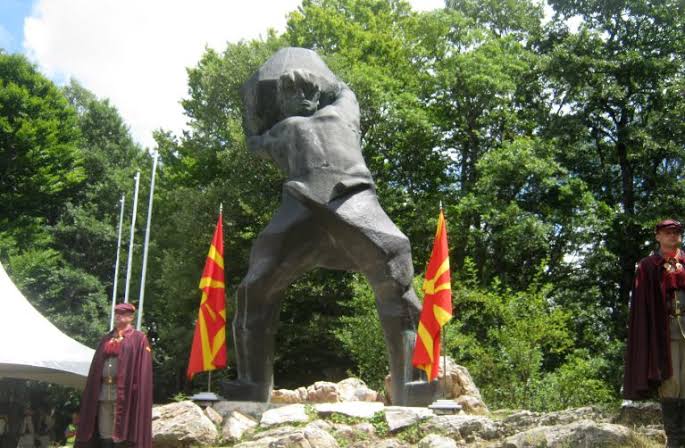
Today, when we celebrate Ilinden, we often reduce the holiday to symbolic celebration — flags, speeches, wreaths at monuments. And that is fine; it is part of how a society remembers. But it is worth pausing at least once a year to ask what exactly that date remembers: that statehood does not fall from the sky. That it is always the result of people who, at a certain moment, decided they had waited long enough, and that they themselves would claim what they believed belonged to them.
Kruševo in 1903 and Prohor Pčinjski in 1944 are not two separate entries in some history textbook. They are two chapters of the same book — a book that continues to be written even today, every time a new generation asks itself what it means to be part of this land, and what is worth defending so that this land continues to exist.
What perhaps connects 1903 and 1944 most is not merely the dates, but the profile of the people who carried those events forward. Neither Kruševo nor Prohor Pčinjski was the work of some small elite deciding on someone else's behalf. These were teachers, priests, villagers, partisans — people whose names, in ordinary circumstances, would never appear in a textbook, yet who here became bearers of something far greater than themselves. That may be the greatest lesson the two Ilindens still carry today: that historical turning points are made not only by generals and statesmen, but by ordinary people who, at the right moment, decided not to stay silent.
So every second of August, as we watch the flags and listen to the speeches, it is worth remembering: we are not celebrating a single moment. We are celebrating a persistence that lasted forty-one years — and which, in some form, endures today.
 Column · Bojan V. · 2 August 2026
The views expressed in this column are the author's own and do not necessarily reflect the views of the MKNews Hub editorial team.