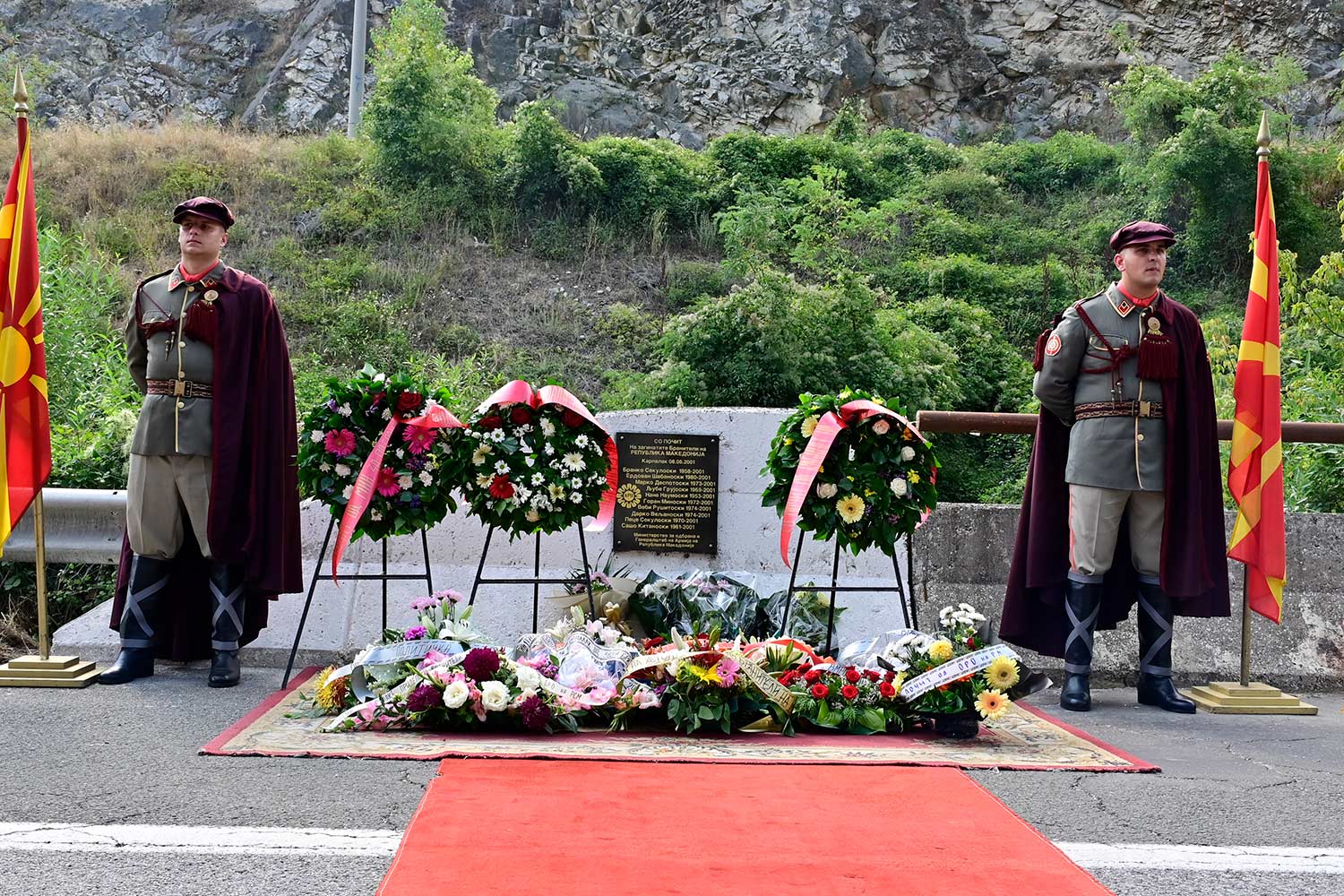
Karpalak, 25 Years On: Remembering the Ten Fallen Soldiers
Column: On 8 August 2001, at the Karpalak site on the Skopje-Tetovo highway, ten army reservists were killed in a terrorist ambush. A quarter century later, the memory remains, and questions about the full truth are still open.
On the morning of 8 August 2001, at 9:30, a convoy of the Army of the Republic of Macedonia set out from the barracks in Prilep toward Tetovo. Five vehicles — an armoured personnel carrier, two buses, a truck and a van — carrying around 120 reservists were on their way to reinforce units in the crisis region. Near the site known as Karpalak, close to the village of Grupčin on the Skopje-Tetovo highway, the convoy was met by an ambush.
Heavy machine-gun and rocket-propelled-grenade fire opened from the dense forest above the road, in an assault organised by the armed NLA group. Within minutes, ten reservists lost their lives and three were wounded. It remains the single largest loss of soldiers in one incident during the 2001 conflict.
Ten Names
Those killed were Nane Naumoski (48), reserve captain; Sašo Kitanovski (40), reserve lieutenant; Goran Minovski (29); Erdogan Šabanovski (21); Ljube Grujoski (32); Branko Sekuloski (43); Darko Veljanovski (27); Pece Sekulovski (31); Vebi Rušitovski (26); and Mirko Despotovski (27) — all reservists from Prilep and the surrounding area. Three wounded soldiers were rescued thanks to pilots who flew unarmed helicopters into the danger zone to pull them from the site.
These ten names stand today on a memorial in the courtyard of the "Mirče Acev" barracks, where each year on 8 August tribute is paid to the victims — families, former fighters and state representatives gathering either at the site of the tragedy on the highway or at commemorations held across the country.
A Quarter Century Later
The 2001 conflict as a whole claimed the lives of 68 Macedonian soldiers and police officers — many of them in ambushes similar to the one at Karpalak. It was a brief but violent year for the country, one that ended with the Ohrid Framework Agreement and a shift toward a political resolution of the crisis. But for the families of the ten killed at Karpalak, the end of the conflict did not mean the end of the questions.
Over the years, the same question has repeatedly been raised: whether a full, official investigation into the exact circumstances of the attack was ever carried out. For many families and former fighters, the answer remains unsatisfying — a sense that the full truth about the precise course of events at Karpalak has still not been fully established and made public, twenty-five years on.
That does not diminish the weight of the plain fact — that ten people set out on duty one August morning, and never came home. Every year, when the August sun again falls on that stretch of highway at Karpalak, the memory is renewed — not as a political statement, but as a debt owed to people who gave everything for their country.
 Column · Bojan V. · 8 August 2026
The views expressed in this column are the author's own and do not necessarily reflect the views of the MKNews Hub editorial team.