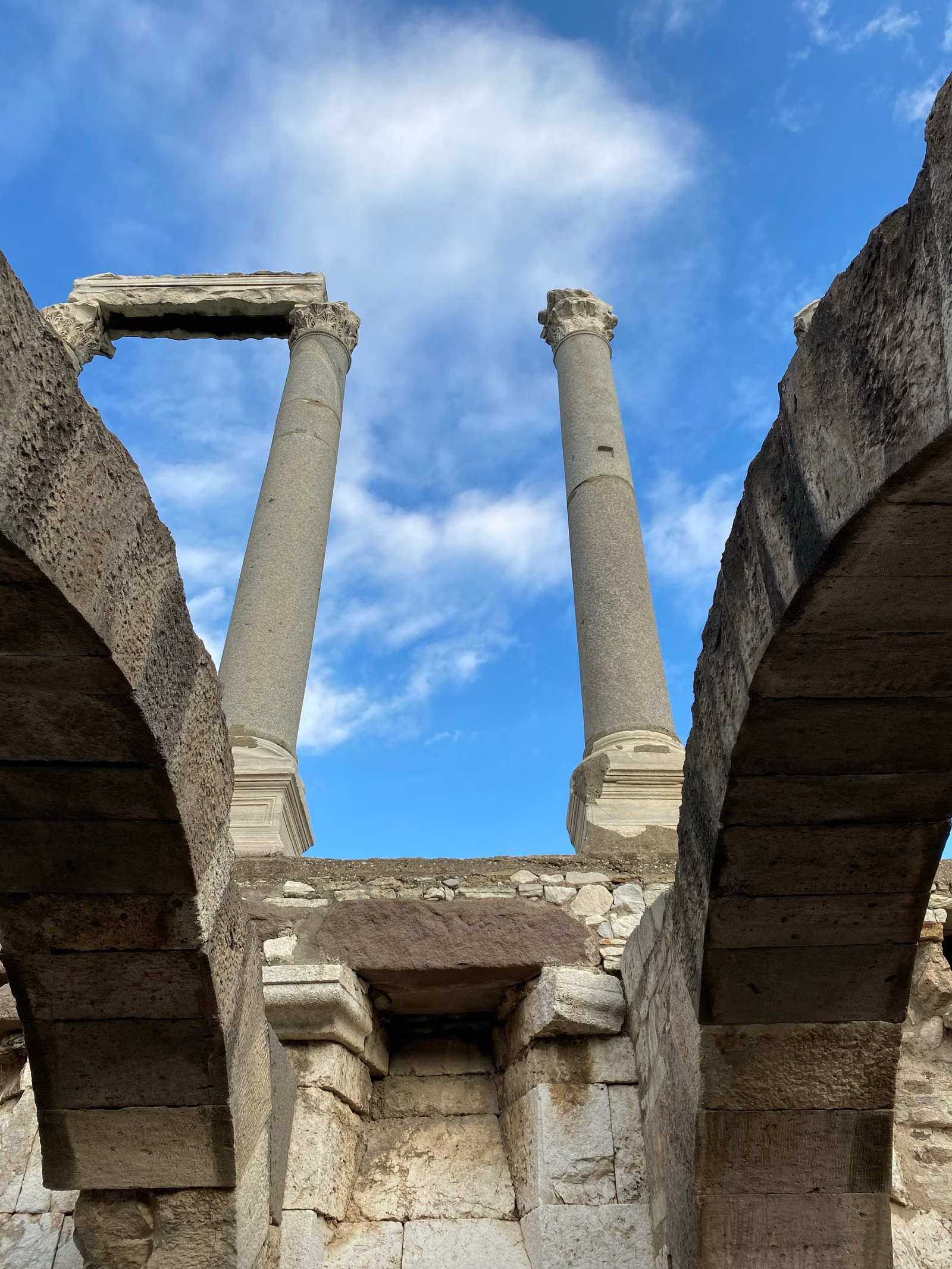
Stobi — the Ancient City Buried at the Meeting of Two Rivers
Forgotten underground for over a thousand years, Stobi is one of the most important ancient cities of the Balkans — a crossroads of Roman roads, home to Europe's densest cluster of floor mosaics and one of the continent's longest-used synagogues.
Between Veles and Gradsko, where the Crna Reka flows into the Vardar, lie the ruins of one of the most significant ancient cities in the Balkans. Stobi isn't just an archaeological site — it's a city whose history spans a thousand years, from Hellenistic times to the end of antiquity.
A Record From Over Two Thousand Years Ago
The oldest surviving mention of Stobi comes from the Roman historian Titus Livius, who wrote that in 197 BC the Macedonian king Philip V defeated the Dardanians right at Stobi. That means the city already existed and held strategic importance more than 2,200 years ago.

A Crossroads of Two Ancient Roads
Stobi sat exactly at the intersection of two of the most important Roman routes in the Balkans — the road linking Thessaloniki with Sirmium (present-day Sremska Mitrovica), and the road running through Heraclea Lyncestis (near Bitola) to Pautalia and Serdica (present-day Sofia). Merchants, armies and ideas passed through this junction for centuries.
A City on Three Terraces
The urban core of Stobi sits on three terraces descending toward the Crna Reka, enclosed by city walls. Archaeologists have so far uncovered a forum, a theatre, basilicas, baths and private houses — among them the so-called House of Peristerias, a complex of at least two floors with a peristyle, two dining rooms and its own bath.
Mosaics Unlike Anywhere Else in Europe
Stobi is known for the sheer concentration of floor mosaics packed into a relatively small area — researchers say it's hard to find another place in Europe with such a rich, artistically valuable mosaic collection gathered in one spot. The site also holds a synagogue that, according to archaeologist James Wiseman, has one of the longest documented histories of continuous use of any synagogue in Europe.
Forgotten, Then Rediscovered
After centuries of existence, Stobi stopped functioning as a city toward the end of the 6th century — likely a combination of earthquakes and Slavic migrations that emptied the settlement. It then lay forgotten underground for nearly 1,300 years, until the first investigations began in the mid-19th century. The most intensive, systematic excavations didn't happen until the 1970s, led by American archaeologist James Wiseman and Macedonian archaeologist Blaga Aleksova.
🔵 Stobi is a first-category cultural monument, owned by the Republic of North Macedonia.
🔵 The excavated urban core covers around 1,600 square meters.
🔵 The site is still actively excavated — new archaeological campaigns continue every summer.
🔵 Its synagogue is considered one of the most significant pieces of evidence for a Jewish presence in the Balkans during antiquity.
MKNews Hub · "Did You Know?" Series · Episode 2 · August 12, 2026
