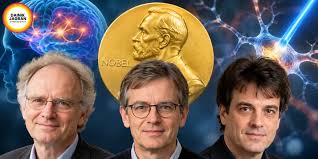
2026 Nobel Prize in Medicine: Light That Switches Brain Cells On and Off
This year's Nobel Prize in Physiology or Medicine went to Karl Deisseroth, Georg Nagel and Peter Hegemann for developing optogenetics — a tool that uses light to precisely control individual brain cells.
The Nobel Committee at the Karolinska Institute awarded the 2026 Prize in Physiology or Medicine to the American-German trio of Karl Deisseroth (Stanford), Georg Nagel and Peter Hegemann (Germany), for developing optogenetics. The technology allows scientists to use light to precisely "switch on" and "switch off" individual nerve cells in the brain.
Optogenetics works by inserting light-sensitive proteins (opsins) into specific neurons, which can then be activated or deactivated with pulses of light of a particular color. That's where the tool's practical power comes from — researchers can now map which specific brain circuits lie behind particular behaviors, emotions or neurological disorders, with a precision earlier methods couldn't offer.

From the discovery of its basic principles to today, optogenetics has become a standard tool in neuroscience, applied in research on depression, Parkinson's disease, addiction and memory. The award comes on the first day of Nobel Week, with the physics, chemistry and literature prizes scheduled over the coming days, and the Peace Prize expected on Friday, October 9.
MKNews Hub · Macedonia · October 6, 2026
